
Views: 0 Author: Site Editor Publish Time: 2026-01-12 Origin: Site
There is a distinct difference between coffee as a source of caffeine and coffee as a sensory experience. Often, the bridge between a mediocre morning cup and a barista-quality brew isn't the coffee maker itself—it's the grinder. Pre-ground beans lose their aromatics within minutes, and blade grinders chop beans unevenly, leading to a mix of bitter and sour flavors.
This is why serious coffee enthusiasts eventually turn to a manual burr coffee grinder. It offers a level of precision, control, and consistency that electric blade grinders simply cannot match. But if you have never used one before, the mechanism might seem intimidating. How do you dial it in? How much effort does it actually take?
This guide will walk you through exactly how to operate a manual grinder, how to match your grind size to your brewing method, and why this tool is the secret to unlocking the full potential of your coffee beans.
Before learning the mechanics, it helps to understand why the manual burr coffee grinder is the preferred tool for many connoisseurs. It is not just about nostalgia or aesthetics; it comes down to physics and flavor.
Blade grinders smash beans into random fragments. Some are dust; others are chunks. When hot water hits this mixture, the dust over-extracts (tasting bitter) and the chunks under-extract (tasting sour). A burr grinder, however, funnels beans between two abrasive surfaces—the burrs. This crushes the beans to a uniform size, ensuring every particle extracts at the same rate.
High-speed electric grinders generate friction and heat. This heat can begin to "cook" the oils in the coffee beans before you even start brewing, altering the flavor profile. A manual coffee grinder operates at a much lower speed, keeping the beans cool and preserving the delicate aromatics.
Whether you are camping or simply don't want to wake up the whole house at 6:00 AM, a hand grinder is superior. Manufacturers like I-Top Industry Limited design these tools with stainless steel 304 frames and compact bodies, making them durable enough for travel and quiet enough for early mornings.
The most critical step in using a manual grinder is setting the "coarseness." Most high-quality hand grinders, such as those with ceramic or stainless steel conical burrs, feature an adjustment knob located at the bottom of the central shaft (under the burrs).
Here is the general process for dialing it in:
Remove the Catch Cup: Unscrew the bottom container where the ground coffee falls.
Locate the Adjuster: Look for a wingnut or a dial at the bottom of the grinding mechanism.
Find the Zero Point: Turn the adjuster clockwise (tightening it) until the handle no longer spins freely. This is your "zero point" or finest setting.
Click Back: Turn the adjuster counter-clockwise (loosening it) and count the "clicks." The number of clicks determines your grind size.
Note: Always consult your specific manufacturer's manual, as the number of clicks can vary between models.
Using the wrong grind size is the most common mistake beginners make. If you try to make espresso with coarse grounds, the water will rush through, resulting in weak, watery coffee. Conversely, using fine grounds in a French Press will make the plunger impossible to push down and leave you with a mouthful of sludge.
Use the table below as a general guide to matching your grind to your equipment.
Grind Texture | Appearance | Recommended Brewing Method | Why? |
|---|---|---|---|
Extra Fine | Powder / Flour | Turkish Coffee | Requires intense extraction time. |
Fine | Table Salt | Espresso Grinder Setting / Moka Pot | Resistance is needed to build pressure for crema. |
Medium-Fine | Fine Sand | Cone Pour Over (V60) | Allows a steady flow rate without clogging the paper filter. |
Medium | Sea Salt | Flat Bottom Drip / Siphon | Standard extraction for automatic brewers. |
Coarse | Breadcrumbs | French Press / Cupping | Longer immersion time requires larger surface area. |
Extra Coarse | Rock Salt | Cold Brew | Very long extraction (12+ hours) requires very coarse beans. |
Once you have determined your settings, the actual process is simple and satisfying.
Precision is key. For a standard cup, a ratio of 1:15 (1 gram of coffee to 15 grams of water) is a good starting point. If you are making a single cup of pour-over, weigh out roughly 15 to 20 grams of beans.
Remove the lid or handle and pour your weighed beans into the top chamber (the hopper). Do not overfill it. If you are grinding for a large batch of Cold Brew, you may need to grind in two shifts.
Place the lid back on to prevent beans from jumping out (a phenomenon known as "popcorn-ing"). Hold the body of the grinder firmly with one hand and rotate the handle clockwise with the other. Keep a steady, consistent pace.
Tip: Do not rely solely on your arm strength. Keep the grinder close to your body or rest it on a counter for stability. This ensures the burrs stay aligned and the grind remains consistent.
Once the resistance disappears, your beans are ground. Give the grinder a gentle tap on the side to knock loose any grounds stuck to the burrs. Unscrew the catch cup and pour your fresh grounds immediately into your filter or portafilter.
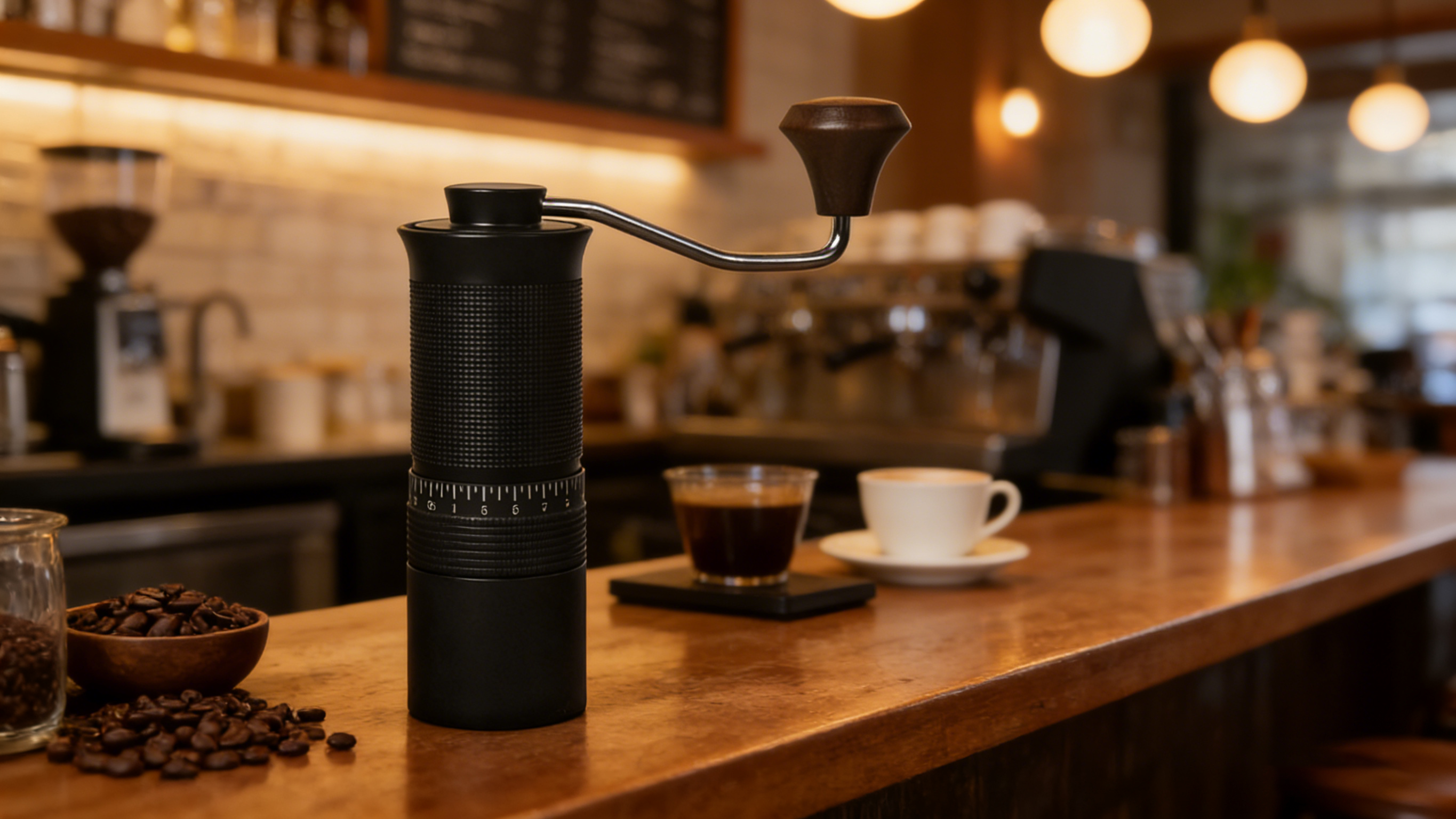
A quality tool lasts a lifetime if cared for properly. Coffee beans contain oils that can build up over time, eventually going rancid and ruining the flavor of future brews.
Daily Maintenance: After every use, blow out the loose chaff (the skin of the coffee bean) from the burrs. Many baristas use a small air blower or a soft brush.
Deep Cleaning: Every few weeks, disassemble the grinder. If you have a ceramic burr grinder, you can usually wash the ceramic parts with warm, soapy water (ensure they are 100% dry before reassembling). However, if you have high-carbon stainless steel burrs, avoid water. Water leads to rust. Instead, clean steel burrs with a stiff brush or specialized grinder cleaning pellets.
1
When browsing products from suppliers like I-Top Industry Limited, you will likely see options for both ceramic and stainless steel burrs. Which one should you choose?
Ceramic Burrs:
Pros: They do not conduct heat, they never rust, and they usually cost less. They are excellent for manual drip coffee and traditional brewing methods.
Cons: They can be brittle. If you drop a ceramic burr on a tile floor, it may crack.
Stainless Steel Burrs:
Pros: Extremely sharp and precise. They produce fewer "fines" (dust), making them the superior choice for an espresso grinder where uniform particle size is critical. They are virtually unbreakable.
Cons: They are susceptible to rust if exposed to moisture and generally come at a higher price point.
1
Switching to a manual workflow does require physical effort. Grinding 20 grams of beans for a morning pour-over might take 45 to 60 seconds depending on the quality of your burrs.
However, the payoff is substantial. You gain complete control over your coffee extraction. You eliminate the noise of an electric motor. Most importantly, you participate in the ritual of creation. The smell of the beans fracturing releases aromatics that you simply miss when pushing a button on a machine.
Whether you are looking for a portable solution for your camping trips or a precision tool for your home espresso bar, a manual burr grinder is an investment that pays dividends in flavor every single morning.


